
Sewage Treatment Plants
The evaluation of the sewage treatment plant systems operates using a stepwise treatment process that has been developed to provide for varying sewage treatment loads efficiently. The first step involves taking in sewage through the inlet chambers of the sewage treatment plant, and removing large floating debris from the wastewater via screening. The screening of debris protects subsequent treatment equipment from deterioration.
The next step is to treat the sewage in equalization or aeration tanks. Here, beneficial microorganisms will break down the organic pollutants in the sewage, as well as decrease the Biological Oxygen Demand (BOD) and Chemical Oxygen Demand (COD).
Once the organic pollutants have been treated, the treated sewage moves into the clarification units. This is where the solids in the treated effluent will settle to the bottom of the clarification units and form sludge, and the clear treated effluent will move on to the next step of treatment. The final stage of the treatment process may involve disinfecting the clarified effluent, using either chlorine, UV, or ozone, before it is either reused or released to a water body.
Applications of Sewage Treatment Plants (STP)
Sewage Treatment Plants are used across a wide range of sectors to ensure safe wastewater management, environmental protection, and efficient reuse of treated water.
Key applications include:
Residential Complexes & Townships:- STPs manage domestic sewage from apartments, housing societies, and gated communities, ensuring safe discharge and water recycling.
Hotels, Hospitals & Malls:- Commercial establishments generate large volumes of wastewater that must be treated to maintain hygiene and comply with pollution control norms.
Industrial Zones:- Industries use STPs to treat sewage generated from office blocks, cafeterias, and non-process facilities within industrial parks.
Educational Institutions :- Schools, colleges, and universities use STPs to manage campus wastewater efficiently and promote sustainable water practices.
Government Buildings & Offices :- Public sector buildings utilize STPs for safe sewage treatment, environmental compliance, and water conservation.
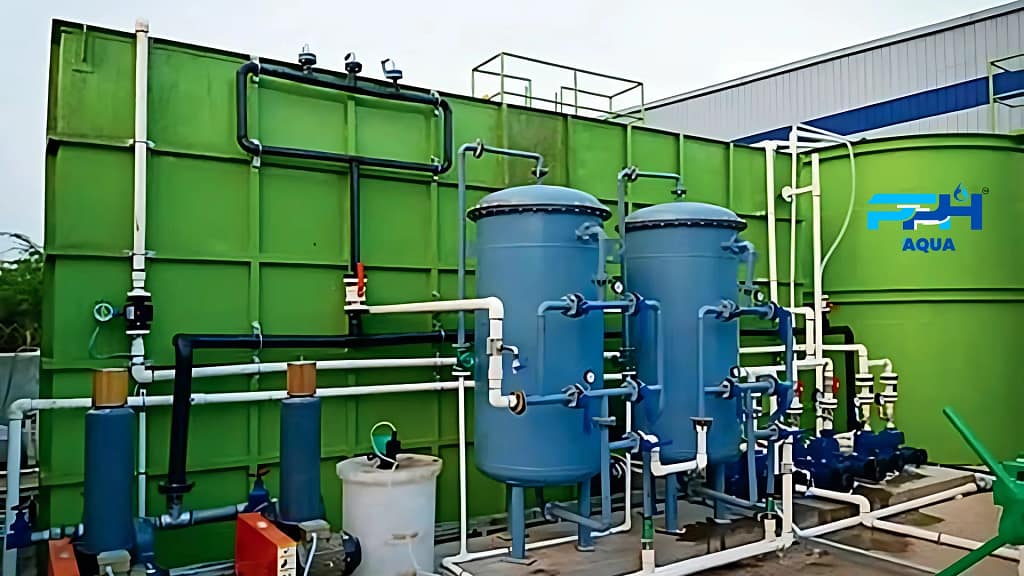
Benefits of Sewage Treatment Plants (STP)
Environmental Protection :- STPs prevent untreated sewage from entering rivers, lakes, and groundwater sources, helping protect natural ecosystems.
Public Health Safety:- Proper sewage treatment eliminates harmful pathogens and reduces the risk of waterborne diseases.
Water Reuse:- Treated wastewater can be reused for gardening, flushing, cooling towers, and other non-potable applications, reducing dependence on freshwater.
Regulatory Compliance :- Installing an STP ensures compliance with environmental laws and pollution control board guidelines, helping avoid penalties.
Odor Control:- Modern STPs include odor management systems that ensure minimal disturbance to surrounding residential or commercial areas.
Sludge Management in Sewage Treatment Plants
As a Wastewater Treatment Plant (WWTP) completes its treatment processes, a portion of the solid waste that has accumulated as sludge will require proper handling in order for the WWTP to operate efficiently. Depending upon the regulatory requirements, a WWTP may be required to stabilize, dewater, and dry a sludge material to allow it to be disposed of safely. Effective management of sludge enhances the overall efficiency of the WWTP, and lessens the likelihood of re-occurring operational problems.
Why Investing in an STP Is a Smart Decision
The installation of a sewage treatment plant (STP) goes beyond meeting regulatory requirements; it is also many years into the future an ongoing investment toward a sustainable environment. STPs can decrease your water costs, lessen the effects on the environment, and improve the green credentials associated with residential, commercial and industrial operations.
As water becomes increasingly scarce and environmental regulations become more stringent, STPs will increasingly be a required component of all contemporary development.
Conclusion
Sewage Treatment Plants are important to treating sewage as part of Responsible Sustainable Management of Wastewater. Sewage Treatment Plants protect the environment and public health, enable governments to reuse Water and comply with regulations, while also supporting Sustainable Growth in Urbanized Areas and Industry.
By choosing appropriate technologies for Sewage Treatment Plants, as well as using proper processes to operate and maintain them, an organisation can provide effective treatment of Sewage Waste, lessen their reliance on Fresh Water Supply, and contribute to the Sustainable Management of Water Resources.